
Crime & Law
S’Court throws out Osun’s bid to recover withheld LG allocations, issues order to FG on autonomy

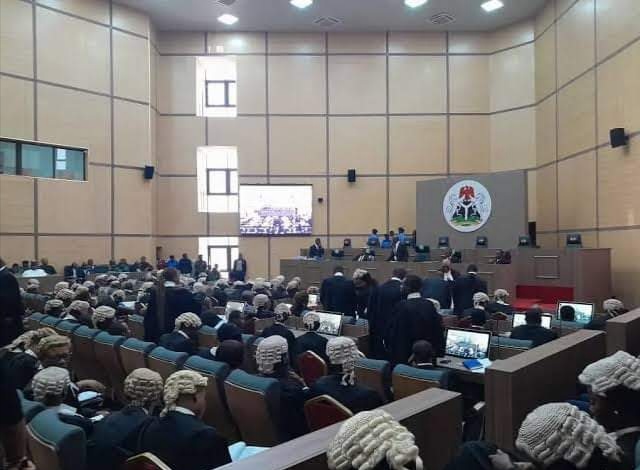
The Supreme Court on Friday dismissed a suit instituted by the Osun State Government seeking to compel the Federal Government to release allocations owed to the state’s local government areas.
A seven-man panel of the court, in a 6–1 split decision, ruled that the action filed by the Osun Attorney General was incompetent.
As reported by Vanguard on Friday, the lead judgment delivered by Justice Mohammed Idris held that Osun’s local government councils did not have the locus standi to invoke the court’s original jurisdiction through the state government. He clarified that only disputes directly between a state and the Federal Government can commence at the Supreme Court, adding that the LGCs—recognised as autonomous entities—were the ones entitled to challenge the Federal Government’s conduct.
Justice Idris rejected the argument that the suit was brought in public interest.
Although the apex court upheld a preliminary objection by the Attorney General of the Federation questioning the competence of the matter, it also urged the Federal Government to fully comply with its earlier judgment granting financial autonomy to all 774 local government areas nationwide.
Osun State had asked the court to declare that the AGF lacked the power to disregard existing judgments of the Federal High Court and Court of Appeal by withholding allocations and ordering payments to sacked APC local government officials.
Musibau Adetunbi, SAN, representing Osun State, argued that the AGF attempted to “destroy the res (subject matter) by attempting to pay the money to one of the contending parties,” stressing that an earlier court order halted the release of the funds.
The Federal Government, however, maintained that “no cause of action was established against it,” insisting that Osun was merely trying to hinder APC officials whose tenure had expired. It further stated that “the plaintiff not only lacked the locus standi but was also involved in an abuse of the judicial process.”


S’Court throws out Osun’s bid to recover withheld LG allocations, issues order to FG on autonomy

BREAKING : Rivers Assembly Speaker, 15 other pro-Wike lawmakers dump PDP for APC

Kaduna: Nigerian Army rescues 10 kidnap victims as bandits abandon ransom, flee

Pensioners to embark on nationwide naked protest unpaid arrears

Rufai Oseni reacts to alleged suspension from Arise TV

Gaza anti-Hamas commander killed while mediating family dispute

2 APC lawmakers dump party, join PDP

BREAKING: Tinubu appoints Ex-CDS Musa defense minister

JUST IN : VIO has no power to impound vehicles or penalise drivers – Appeal Court

JUST IN: Wike, Fayose among top members issued expulsion certificates by PDP

Chaos in Senate as Goje alleges Akpabio engaged in ‘unparliamentary conduct’

JUST IN: CBN increases daily ATM withdrawal limit

Adeleke to announce new political party before December 13 — Osun Commissioner

