
Opinion
How Plateau can become Nigeria’s next industrial heartland, By Emmanuel Onwubiko

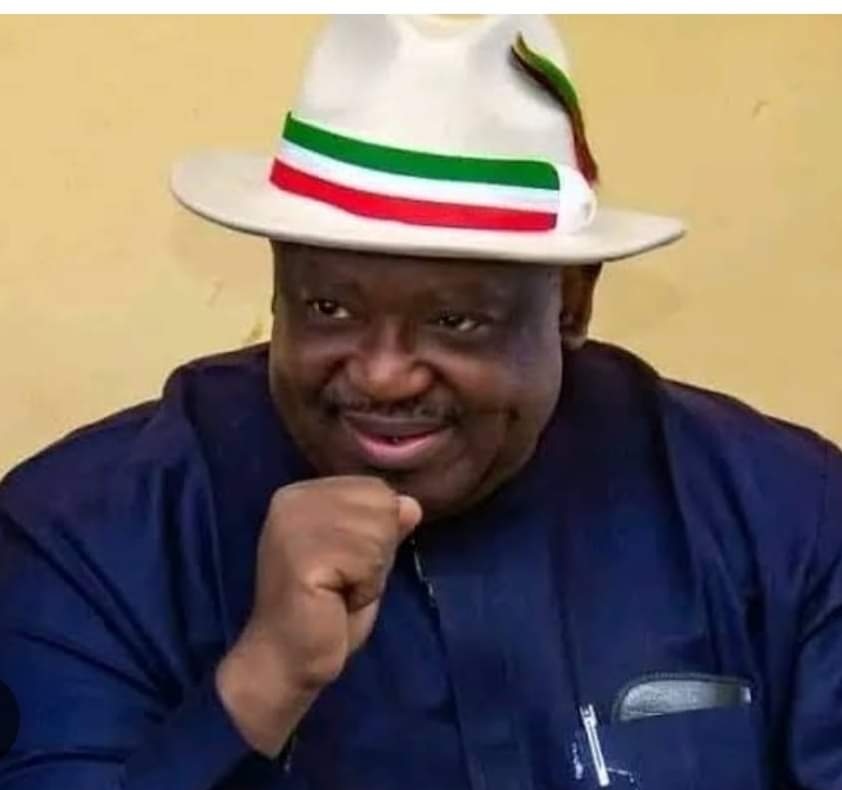
There is a trending story in the political governance circles in Nigeria that something is definitely cooking in Plateau State which gained reputation as the tourism haven of the Federal Republic of Nigeria.
There is little wonder about this emerging trend because Plateau State stands at an inflection point. Two and a half years into Governor Caleb Manasseh Mutfwang’s administration, what was once a landscape marked by unplanned urban sprawl, deteriorating infrastructure and recurrent communal tensions is beginning to show signs of intentional renewal. The governor’s emphasis on restoring a modern masterplan, driving urban regeneration, stimulating industrial capacity and embedding peace as a governance priority has created a framework that, if sustained, could transform Plateau into a competitive centre of agro-industrial and mineral-based growth. The promise is real, but it will depend on disciplined implementation and a governance culture that resists the temptation of political shortcuts.
Urban renewal has emerged as one of the defining pillars of Governor Mutfwang’s strategy. Cities are the engines of economic life, and when they are poorly planned, commercial activity is stifled, investments retreat and public infrastructure collapses under pressure. The revival of the Greater Jos Master Plan and the enforcement of development regulations through instruments such as Executive Order No. 003 represent a long-overdue move to restore order to the state’s capital and its environs. The administration’s engagements with physical planners and its renewed commitment to regulating land use demonstrate an understanding that economic expansion cannot happen in a climate of structural disorder. Restoring discipline to land administration and enforcing building and traffic standards can lower business costs, create safer urban spaces and give investors the confidence that Plateau is prepared for modern economic activity.
These policy intentions are reinforced by concrete visible interventions. Rehabilitation of township roads within Jos and its adjoining communities has already reduced travel difficulties and eased commercial movement. The administration’s declaration of a “Year of Groundbreaking Road Construction” signalled an ambition to move aggressively from planning to execution. Road rehabilitation, drainage reconstruction and the revitalisation of public facilities are essential steps that not only improve logistics but also stimulate economic activity, especially in the construction value chain. The refurbishment of public hospitality assets such as Hill Station and Plateau Hotel further strengthens the state’s tourism and business environment, providing venues capable of hosting investment forums, exhibitions and cultural events that can draw national attention back to Plateau.
Perhaps the most significant indicator of the administration’s economic direction is its early focus on industrialisation. Plateau has clear comparative advantages in agriculture and minerals, yet for decades these sectors have underperformed due to inadequate processing capacity, outdated methods and the absence of deliberate state-led coordination. The commissioning of a modern maize-milling plant in Jos symbolises a shift towards value addition. Beyond the fanfare, such a project provides a structured market for farmers, encourages productivity, reduces wastage and keeps economic value within the state. When agro-processing becomes a deliberate state-supported model rather than an isolated effort, it creates clusters of jobs, improves export capacity and expands internally generated revenue.
Plateau’s mining potential has long been acknowledged but poorly harnessed. The state’s mineral deposits, including tin and columbite, could serve as the backbone of a revitalised industrial economy. Governor Mutfwang’s repeated emphasis on strengthening the state’s mineral economy demonstrates a willingness to move beyond the historical pattern of raw mineral extraction with minimal local value. For Plateau to benefit meaningfully, mining must be accompanied by transparent licensing processes, community benefit schemes, environmental safeguards and encouragement for downstream processing. When minerals are processed within the state, jobs multiply, skills deepen and the economy stabilises against fluctuating federal allocations.
The administration’s efforts would be incomplete without acknowledging the centrality of peacebuilding. Plateau’s economic stagnation in past decades has been inseparable from cycles of communal conflict, farmer-herder tensions and the displacement of thousands. The Mutfwang administration has approached peace not as a ceremonial priority but as a practical pillar of development. The activation of resettlement committees, the strengthening of the Plateau Peace Building Agency and the sustained engagements with federal security agencies suggest an understanding that peace is an economic policy tool. Investors do not go where violence is cyclical. Roads, industries and masterplans make sense only in an environment where communities are stable, rights are respected and justice is accessible. Peacebuilding must therefore be mainstreamed into every project—schools must be rebuilt where conflicts disrupted learning, livelihoods restored where people were displaced, and infrastructure extended to communities historically neglected.
Despite the promising direction, significant governance tests remain. Masterplans only succeed when institutions that enforce them are strong, professional and shielded from political interference. Land regularisation must be transparent to prevent a perception that urban renewal is a facade for elite acquisition. Fiscal sustainability is equally crucial; ambitious infrastructure programmes must be matched by aggressive revenue reforms, effective public-private partnerships and prudent borrowing. Political will must remain consistent, and reforms must not fall victim to the next election cycle. Investors need predictability, and citizens need the assurance that the urban and industrial reforms will outlive their initiators.
The opportunity before Plateau is considerable. The state can take advantage of its cool climate to expand high-value agriculture that supports agro-processing. The restored masterplan can enable the creation of modern industrial zones with pre-installed utilities. The tourism potential, long hampered by insecurity, can rebound through a combination of hospitality investments and improved road networks. Mining communities can evolve into structured economic corridors anchored by processing plants rather than sites of unregulated extraction. Small and medium enterprises can be deliberately integrated into public works programmes, enabling them to grow in tandem with state-led development. All these possibilities depend on sustained leadership that recognises the link between physical order, economic strategy and social cohesion.
Success will be measured not by the elegance of policy documents but by tangible outcomes: the number of factories operating in Jos and its industrial clusters; the kilometres of properly paved roads linking rural production areas to markets; the proportion of displaced persons successfully resettled; the volume of processed rather than raw agricultural outputs; and the confidence of local and foreign investors in the state’s governance environment. These are the indicators citizens and the media must continue to track as the administration proceeds with its agenda.
Plateau State has a rare opportunity to redefine its identity. It can move from a state associated with protracted conflict to one known for industrial dynamism, urban organisation, innovation and tourism appeal. Governor Mutfwang’s first two and a half years have sketched the outlines of that transformation. The task now is to ensure consistency, deepen institutional reforms and keep peace at the centre of development. If this trajectory is preserved, Plateau could become one of the most compelling success stories of subnational transformation in Nigeria—an industrial heartland built not on chance but on deliberate vision, disciplined planning and a renewed social contract with its people.
*COMRADE EMMANUEL NNADOZIE ONWUBIKO is the founder of HUMAN RIGHTS WRITERS ASSOCIATION OF NIGERIA and was NATIONAL COMMISSIONER OF THE NATIONAL HUMAN RIGHTS COMMISSION OF NIGERIA.


Why naira may soon exchange below N1,000 per dollar – Otedola

JUST IN : El-Rufai evades arrest at Abuja airport

A life of honour and service: Celebrating 35 years of meritorious policing – The pulling out of AIG Danjuma Aboki

Use AI responsibly, Bingham VC tells scholars at joint postgraduate training

Adeyanju calls on DSS, EFCC to Probe El-Rufai over corruption and insecurity allegations

Judge steps aside in Malami’s ₦213bn EFCC forfeiture suit (SEE REASON)

Food and beverage Workers occupy NAFDAC Lagos office over sachet alcohol ban

BREAKING: Senate adopts electronic, manual transmission of election results

Naira outperforms Dollar in remarkable comeback

FG to commence sale of state-owned assets – Minister

Electoral Act Amendment: ‘Akpabio is the real issue, Tinubu’s lapdog’ — El-Rufai

How EFCC arraigned suspects who allegedly collected ₦603m from a Woman to facilitate NNPC GMD Appointment

2027: Makarfi, Lamido step in as PDP Rift deepens at crucial Kaduna meeting


