
Latest News
Reps begin probe into recovery and status of N30bn NSIPA fund

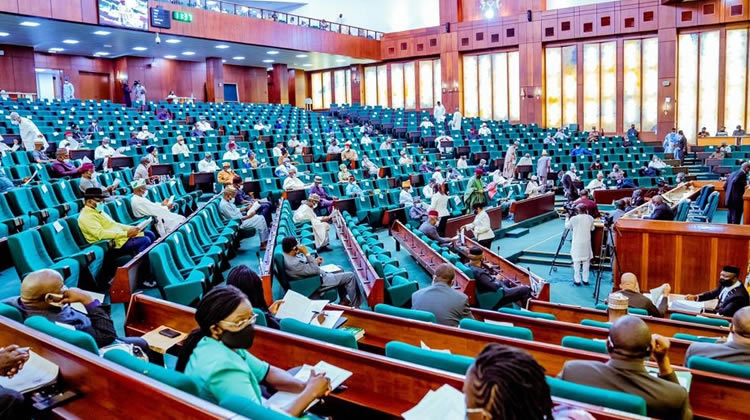
The House of Representatives on Tuesday resolved to investigate the status of the N30bn recovered from the National Social Investment Programme Agency between 2024 and 2025, to clear bottlenecks delaying the restart of key social intervention programmes.
The decision followed the adoption of a motion of urgent public importance sponsored by a member representing Bida/Gbako/Katcha Federal Constituency of Niger State, Saidu Abdullahi.
NSIPA is the agency responsible for implementing the Federal Government’s core social protection initiatives, including the Government Enterprise and Empowerment Programme, the Home-Grown School Feeding Programme, and the Grant for Vulnerable Groups. These programmes are central to efforts to reduce poverty, boost school enrolment, increase financial inclusion, and support small-scale entrepreneurs.
President Bola Tinubu suspended NSIPA operations on January 8, 2024, for six weeks to allow security and anti-graft agencies to conduct a comprehensive investigation into alleged financial irregularities within the scheme.
Moving the motion, Abdullahi noted that, “The investigation resulted in the tracing, freezing, and recovery of substantial public funds belonging to the Agency from Deposit Money Banks and Payment Service Providers, including funds appropriated for TraderMoni, MarketMoni, FarmerMoni, and Grants for Vulnerable Groups.”
READ MORE : Reps move to lower age requirement for governors, senators
He expressed concern that “credible sources have indicated that these recovered funds, estimated at over ₦30bn, have not been remitted into NSIPA’s designated Treasury Single Account, thereby stalling programme implementation and leaving millions of intended beneficiaries without the social and economic support envisioned by the Federal Government.”
Abdullahi warned that the delay in releasing the funds was undermining the administration’s economic recovery plans.
“We are deeply concerned that the prolonged non-release of these funds undermines the Renewed Hope Agenda by slowing down poverty alleviation efforts, weakening small-scale enterprises, exacerbating hardship in rural and urban communities, delaying local economic stimulation, and eroding public trust in the government’s social protection commitments.”
He also flagged the uncertainty around the management of the recovered funds.
“We are also concerned that the continued uncertainty over the exact location, custodial status, and administrative handling of the recovered funds poses fiscal risks, disrupts programme timelines, and may create institutional bottlenecks across related national social intervention initiatives,” he said.
According to him, despite the lifting of NSIPA’s suspension on January 21, 2025, the agency has been unable to resume full operations.
“We are disturbed that despite the presidential approval lifting the suspension on NSIPA operations… the Agency has been unable to resume full implementation of its programmes, allegedly due to the non-availability of recovered funds expected to have been released, thereby exposing millions of Nigerians to prolonged socioeconomic distress,” he said.
Deputy Speaker, Benjamin Kalu, who presided over the plenary, put the motion to a voice vote, and it was unanimously adopted.
Following the adoption, the House resolved to set up an ad hoc committee to investigate the total recoveries made during the 2024–2025 probe, “determine their current status and custodianship, and identify any issues delaying their release to the appropriate agencies.”
The committee is also mandated to interface with relevant agencies and obtain a clear plan from NSIPA on the utilisation of the funds once released. It is expected to report back to the House within four weeks.
The NSIPA became the subject of national scrutiny in 2024 following allegations of large-scale mismanagement of funds running into billions of naira. Investigators from the Economic and Financial Crimes Commission and other security agencies reportedly uncovered irregular payment channels, diversion of funds meant for TraderMoni, MarketMoni and other poverty alleviation schemes, as well as the use of unapproved financial intermediaries.
The probe also examined allegations that beneficiaries’ data was manipulated and that funds meant for vulnerable households, school feeding, and microcredit programmes were retained in commercial banks instead of being sent to the Treasury Single Account.


Africa needs vibrant leaders aged 25–50, says Jonathan

Nigerian Army varsity professor dies in captivity month after abduction

KEDCO bemoans electricity supply challenges in North-West, seeks FG’s intervention

Niger: Illegal Miners kill NSCDC officer, torch patrol vehicle in Kataeregi

Nigerian trapped in Russian military camp begs FG for urgent repatriation

Why naira may soon exchange below N1,000 per dollar – Otedola

JUST IN : El-Rufai evades arrest at Abuja airport

BREAKING: Senate adopts electronic, manual transmission of election results

FG to commence sale of state-owned assets – Minister

Naira outperforms Dollar in remarkable comeback

Electoral Act Amendment: ‘Akpabio is the real issue, Tinubu’s lapdog’ — El-Rufai

How EFCC arraigned suspects who allegedly collected ₦603m from a Woman to facilitate NNPC GMD Appointment

Kinsmen oppose Alia’s second-term ambition


