
Security
How names of Boko Haram members were found on army recruitment list – Ex-deputy speaker

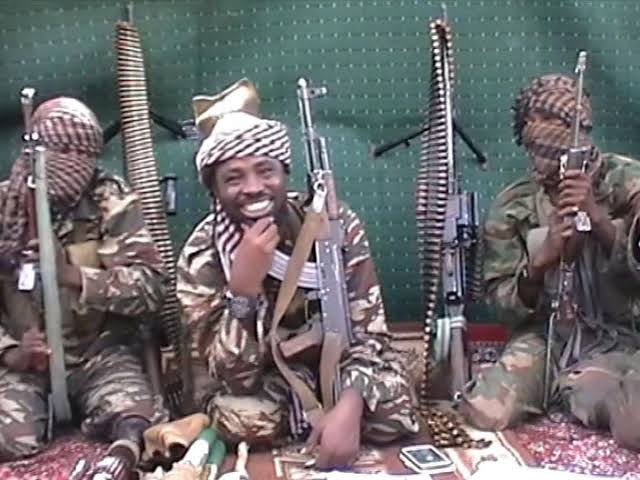
Former Deputy Speaker of the House of Representatives, Idris Wase, on Wednesday revealed that suspected Boko Haram members and other criminal elements were once discovered among those shortlisted for recruitment into both the Nigerian Army and the police.
Wase made the revelation during a special plenary dedicated to reviewing the nation’s worsening security challenges.Representing Wase Federal Constituency in Plateau State under the All Progressives Congress, he cautioned that the infiltration of security agencies by individuals with criminal backgrounds presents a grave risk to national stability.
He said the information he shared could be confirmed by the former House Committee on Defence Chairman, now heading the Committee on the Federal Capital Territory, Muktar Betara.
According to him, “My brother and friend, the former Defence Committee Chairman, Honourable Betara can attest to this. There were recruitment exercises where names of known Boko Haram members appeared on the shortlist. Armed robbers and other criminals were also found among those cleared for the Army and police.”
Wase urged lawmakers and stakeholders to be mindful when endorsing candidates for enlistment into the armed forces and police, insisting that only individuals of proven integrity should be recommended.
The lawmaker, who recounted losing a brother, cousin and nephew to terrorist violence, also stated that the North-Central region accounts for roughly 52 per cent of the country’s total insecurity burden.
He shared a troubling appeal from one of his younger brothers, who pleaded to be moved away from their community due to escalating violence.
Wase further called for a reassessment of the presidential directive removing police officers from VIP protection duties. While acknowledging the purpose of the policy, he stressed the need for proper classification to prevent exposing critical officials to unnecessary risks.
Speaking on behalf of the North-West caucus, Sada Soli described the region’s insecurity as “complex and layered,” rooted in a mix of criminal activity, environmental strain, poor governance and deepening economic hardship.
He stated that an exclusively military approach would not resolve the situation, advocating instead for a combination of security operations and reforms in governance, environmental practices and economic development.“Lasting peace depends on rebuilding trust in government, reforming land and livestock systems, and ensuring that communities help shape solutions,” Soli said.
For the North-East caucus, Muktar Betara said the region remains the “ground zero of terrorism, insurgency and recurring communal violence.” He referenced events from the 2015 Baga massacre to repeated bomb attacks that have killed both civilians and security personnel.“Our challenges are massive, but with coordinated action, commitment and sound strategy, we can restore confidence and stop the relentless spread of violence,” Betara said.
A South-South senator, Solomon Bob of the PDP (Rivers), accused successive governments of lacking the will to confront insecurity head-on.“Since 1999, what we have seen is leadership failure. Governments have chosen to placate terrorists, negotiating with killers instead of enforcing the law,” he said, arguing that referring to terrorism as mere banditry minimizes the scale of the problem.
In her remarks, Kafilat Ogbara, Chair of the House Committee on Women Affairs, condemned the devastating impact of insecurity on women and children, referencing the recent mass abductions in Papiri and Kamba.“These are not just security failures; they represent a breach of the state’s core obligation to safeguard lives and property,” she lamented.
(Boko Haram)


US deploys second aircraft carrier to Middle East as tensions with Iran escalate

Fake Major General arrested as army dismisses false military claims

Gunmen kidnap 12-year-old girl near school gate in Ibadan

2027 : Atiku opens up on alleged talks with Makinde over vice-presidential slot

INEC seeks N1.04tr for off-cycle, 2027 elections, urges early release of funds

2 Nigerian men killed while fighting for Russian army in Ukraine

Wike : Gov Fubara dissolves Rivers Executive Council

BREAKING: Senate adopts electronic, manual transmission of election results

How EFCC arraigned suspects who allegedly collected ₦603m from a Woman to facilitate NNPC GMD Appointment

FG to commence sale of state-owned assets – Minister

Why I Resigned As NAHCON Chairman – Usman

2027: Makarfi, Lamido step in as PDP Rift deepens at crucial Kaduna meeting

Gunmen kidnap nine Catholic worshippers in Benue


